Invoice vs Bill vs Receipt: What's the Difference?
Using the wrong document at the wrong stage of a transaction creates confusion for clients and gaps in your financial records. This guide breaks down what each document does, and when to use it.
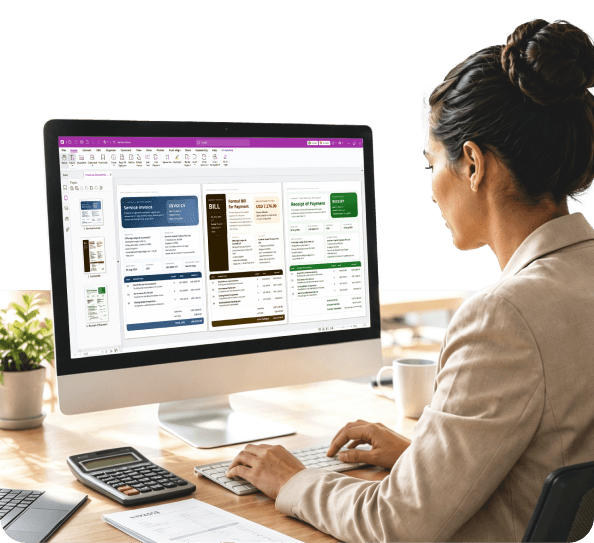
What Is an Invoice, a Bill, and a Receipt?
Three documents, three different moments in the same transaction.
An invoice is a formal document that a seller sends to request payment for goods or services, typically before payment is made, including an itemized list, payment terms, and a due date.
A bill shows a customer what they owe, typically at or near the point of service, and is often simpler than an invoice — a restaurant check or a utility bill are common examples associated with immediate payment.
A receipt confirms that payment has been made and a transaction has been completed. It's issued after payment as proof the seller received the money, not a request for it.
Where Each Document Fits in a Transaction
Timing and purpose are what separate these three documents.
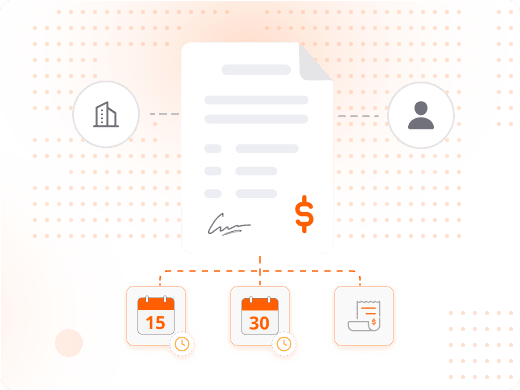
When Should You Use an Invoice?
Use an invoice when billing a client for completed professional services, requesting payment for a B2B order, or billing on payment terms like Net 15 or Net 30.
Invoices create a documented request for payment that both parties can reference — the foundation of accounts receivable tracking and essential for accounting and tax filing.
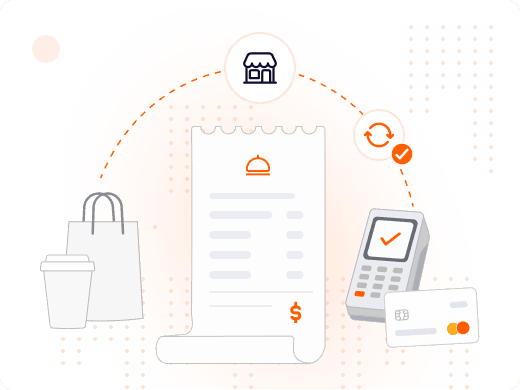
When Should You Use a Bill?
Use a bill when presenting charges at the point of service or delivery, in consumer-facing transactions where immediate payment is expected, or for recurring utility and subscription charges.
In everyday usage, 'invoice' and 'bill' are sometimes used interchangeably, but invoices are associated with B2B and deferred payment, while bills are associated with consumer, at-point-of-service payment.
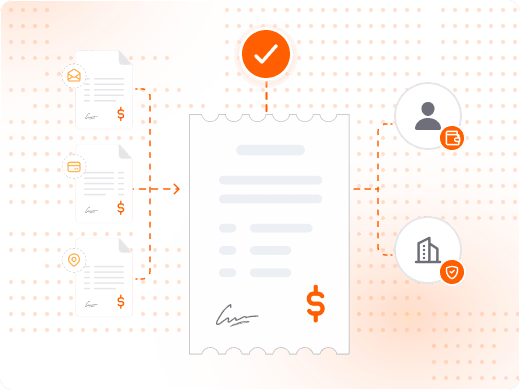
When Should You Issue a Receipt?
Issue a receipt after any payment is received — whether from an invoice, a bill, or a point-of-sale transaction — and for any purchase a client may need to document for tax or expense purposes.
Receipts matter for both sides: proof of payment for the buyer's expense reporting, and a complete transaction record for the seller's accounting and audits.
Do You Need Both an Invoice and a Receipt?
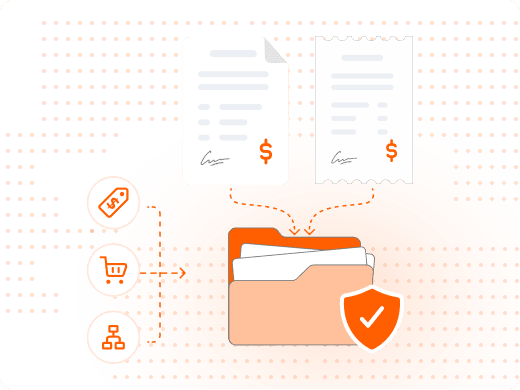
In most professional billing workflows, yes. The invoice documents what was agreed and owed; the receipt documents that the agreed amount was paid.
Together, they provide stronger evidence of a legitimate transaction than either document alone — particularly important for VAT, sales tax, and expense reimbursement workflows.
Invoice vs. Bill vs. Receipt — Detailed Comparison
| Feature | Invoice | Bill | Receipt |
|---|---|---|---|
| Issued before payment | Yes | Yes | No |
| Issued after payment | No | No | Yes |
| Requests payment | Yes | Yes | No |
| Confirms payment completed | No | No | Yes |
| Includes payment terms | Yes | Sometimes | No |
| Includes invoice / reference number | Yes | Sometimes | Yes |
| Itemized line items | Yes | Sometimes | Yes |
| Records payment method | No | No | Yes |
| Common in B2B transactions | Yes | Less common | Yes |
| Common in retail / consumer | Less common | Yes | Yes |
| Can be signed electronically | Yes | Rarely | No |
Feature
Issued before payment
- Invoice
- Yes
- Bill
- Yes
- Receipt
- No
Feature
Issued after payment
- Invoice
- No
- Bill
- No
- Receipt
- Yes
Feature
Requests payment
- Invoice
- Yes
- Bill
- Yes
- Receipt
- No
Feature
Confirms payment completed
- Invoice
- No
- Bill
- No
- Receipt
- Yes
Feature
Includes payment terms
- Invoice
- Yes
- Bill
- Sometimes
- Receipt
- No
Feature
Includes invoice / reference number
- Invoice
- Yes
- Bill
- Sometimes
- Receipt
- Yes
Feature
Itemized line items
- Invoice
- Yes
- Bill
- Sometimes
- Receipt
- Yes
Feature
Records payment method
- Invoice
- No
- Bill
- No
- Receipt
- Yes
Feature
Common in B2B transactions
- Invoice
- Yes
- Bill
- Less common
- Receipt
- Yes
Feature
Common in retail / consumer
- Invoice
- Less common
- Bill
- Yes
- Receipt
- Yes
Feature
Can be signed electronically
- Invoice
- Yes
- Bill
- Rarely
- Receipt
- No
Why Getting This Right Matters for Your Records
The wrong document at the wrong stage creates real problems later.
Using the wrong document at the wrong stage of a transaction creates confusion for clients, gaps in your financial records, and complications at tax time — understanding which document to use is one of the basics of running a clean billing workflow.
For accounting, tax filing, and audit purposes, having both an invoice and a receipt together is stronger evidence of a legitimate transaction than either document alone, especially for businesses dealing with VAT or sales tax.
PDF is the standard format for all three document types because it preserves formatting exactly, cannot be accidentally edited by the recipient, and is accepted by accounting software, expense platforms, and tax authorities.
What You Can Do with Foxit
Create, send, and approve every stage of the transaction.
Create Professional Invoices
Build consistent, itemized invoice templates in Foxit PDF Editor that maintain formatting on any device.
Generate Matching Receipts
Produce clean, professional receipts referencing the original invoice number for a complete paired record.
Keep Formatting Consistent
Save financial documents as PDF so they can't be accidentally edited and look the same for every recipient.
Collect Approvals Electronically
Use Foxit eSign to collect client sign-off on invoices before payment, with a full audit trail returned automatically.
Maintain Organized Records
Store invoices and receipts in a named, searchable file structure so nothing goes missing before an audit or filing.
Support VAT and Tax Workflows
Pair invoices and receipts to provide stronger evidence of legitimate transactions for VAT-registered and tax-reporting businesses.
How Invoices, Bills, and Receipts Work Together
Not every transaction uses all three, but each plays a distinct role when it does.
A freelance web designer completing a $3,500 project shows how the sequence typically plays out: the designer sends an invoice after delivery, the client reviews and pays by the Net 30 due date, and the designer issues a receipt confirming the payment — giving both parties documentation of the completed transaction.
- B2B and professional services: Invoice followed by receipt is the standard sequence — a formal request for payment followed by confirmation once it's received, forming the accounts receivable record.
- Retail and point-of-sale: Retail transactions typically use a bill, presented as a point-of-sale charge, followed immediately by a receipt confirming the payment.
- Freelancers and consultants: Freelancers send an invoice with clear payment terms after project delivery, then issue a receipt referencing that invoice number once payment clears.
- Accounting and expense reporting: Accounting teams rely on the pairing of invoice and receipt as stronger evidence of a legitimate transaction than either document alone, particularly for expense reimbursement and audits.