Foxit eSign Essentials and eSign Business
Send, track, sign, notarize, and collect payments.
Buy Now

Use Legal Signatures Practically Anywhere

Confidently use your signed documents

Buy Now
Use legal signatures practically anywhere.

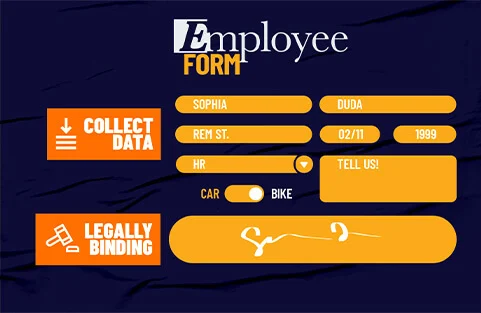
Legally Binding Electronic Signatures

As a trusted electronic signature provider, we ensure all components are present that establish your document as legally-binding; this includes clearly maintained association records, audit trails, robust retention methods, and easily and clearly established intents to sign and conduct business electronically.


Court Admissible Signed Documents

Feel confident knowing that your digitally signed document is tamper proof and protected from improper access and use, is verifiable and defensible, and includes audit details proving accurate signing actions; all details that judges will look for when determining document legality.

Use In Almost Any Industry

Electronic signatures are being more commonly used across popular industries such as healthcare, real estate, finance, business, education, and more to streamline processes and get more done. Quickly and easily complete common tax forms, contract agreements, invoicing, medical paperwork, purchase agreements, donation collections, and more using electronic signatures.

Electronic Signature Legality by Country

The United States

Electronic Signature Law

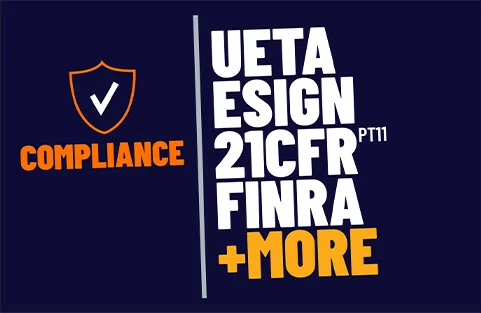
The US has legally recognized the use of eSignatures with the Electronic Signatures in Global and National Commerce Act (ESIGN) passed in 2000. In addition, the Uniform Electronic Transaction Act (UETA) passed in 1999 has been adopted by 49 states, the District of Columbia, and the US Virgin Islands. Both laws have paved the way for the validity and broad use of electronic signatures for the purpose of facilitating business agreements in the United States.

Summary of the Law

Under the ESIGN Act, signatures may not be denied legal effect, validity, or enforceability solely because it is in electronic form. The Act defines an electronic signature as an “electronic sound, symbol, or process, attached to or logically associated with a contract or other record and executed or adopted by a person with the intent to sign the record”.

Under both laws, an eSignature is legally recognized as long as four criteria are met:

  1. 1Intent to sign – parties must clearly show intention to sign the document.
  2. 2Consent to do business electronically – parties must indicate consent to conduct business electronically.
  3. 3Association of signature with the record – when signed electronically, the system used to capture the transaction must keep an associated record that reflects the way the signature was produced, including time and date stamps.
  4. 4Record retention – a record of the signing must be kept and made reproducible to parties who signed the contract.

Exceptions

Electronic signatures are not recommended for documents such as:

  • Wills, codicils and testamentary trusts
  • Marriage and adoptions
  • Divorce papers and court orders
  • Power of attorney
  • Mortgage agreements and certain real estate transactions
  • Documents requiring notarization

Foxit eSign has been configured to comply with all local laws within this country relevant to electronic signatures.

Legal Disclaimer

The information on this site is for general information purposes only. It is not intended to be used or interpreted as legal advice. Local laws and regulations governing electronic signatures are changed and modified quickly, so Foxit cannot guarantee that the provided information is accurate with the current iteration of the law. Should you have any further questions related to any of the information on this site, please consult with a licensed attorney in your area.

And Much More

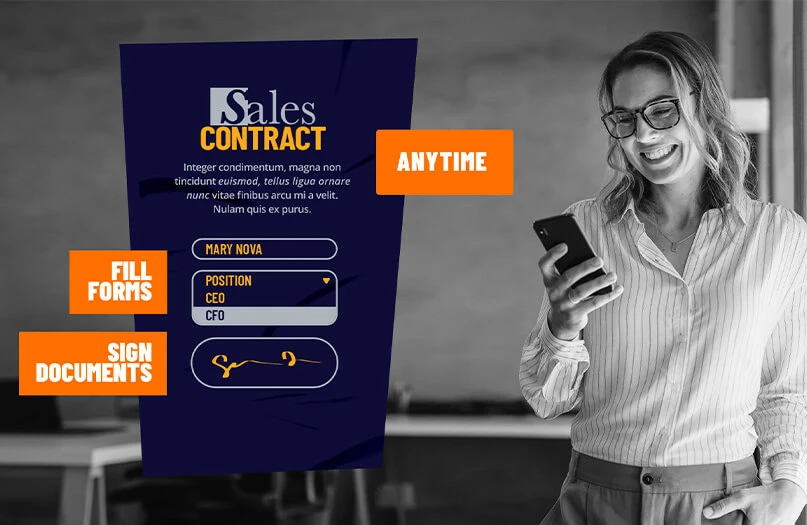
Prepare documents, contracts, forms, templates, and more.

Prepare Documents, Contracts, Forms, Templates, and More

Explore More
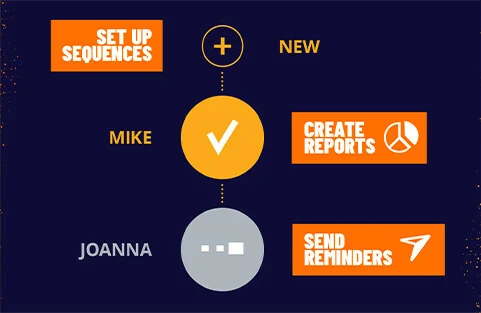
Share document templates and collaborate with your team.

Share Document Templates and Collaborate with Your Team

Explore More